In lessons 1-3 you have learned the basic concepts of Georgian verb conjugation, using verb objects and how to use past tenses in Georgian. As with all languages (and all learning topics really) the rules and patterns you learn are only true to a certain extend and you have to learn a number of exceptions to each rule as well.
About the Georgian verbs it is important to know: The rules described in lessons 1-3 only fully apply to a certain number of verbs in Georgian, about two thirds of all 3,000-4,000 Georgian verbs (I counted: 66% or 330 of all 500+ verbs here on kartuliena.eu) - I call them the "Class-I Verbs", some of the more common Georgian textbooks have different names for them: transitive verbs, active verbs etc.
 Stefan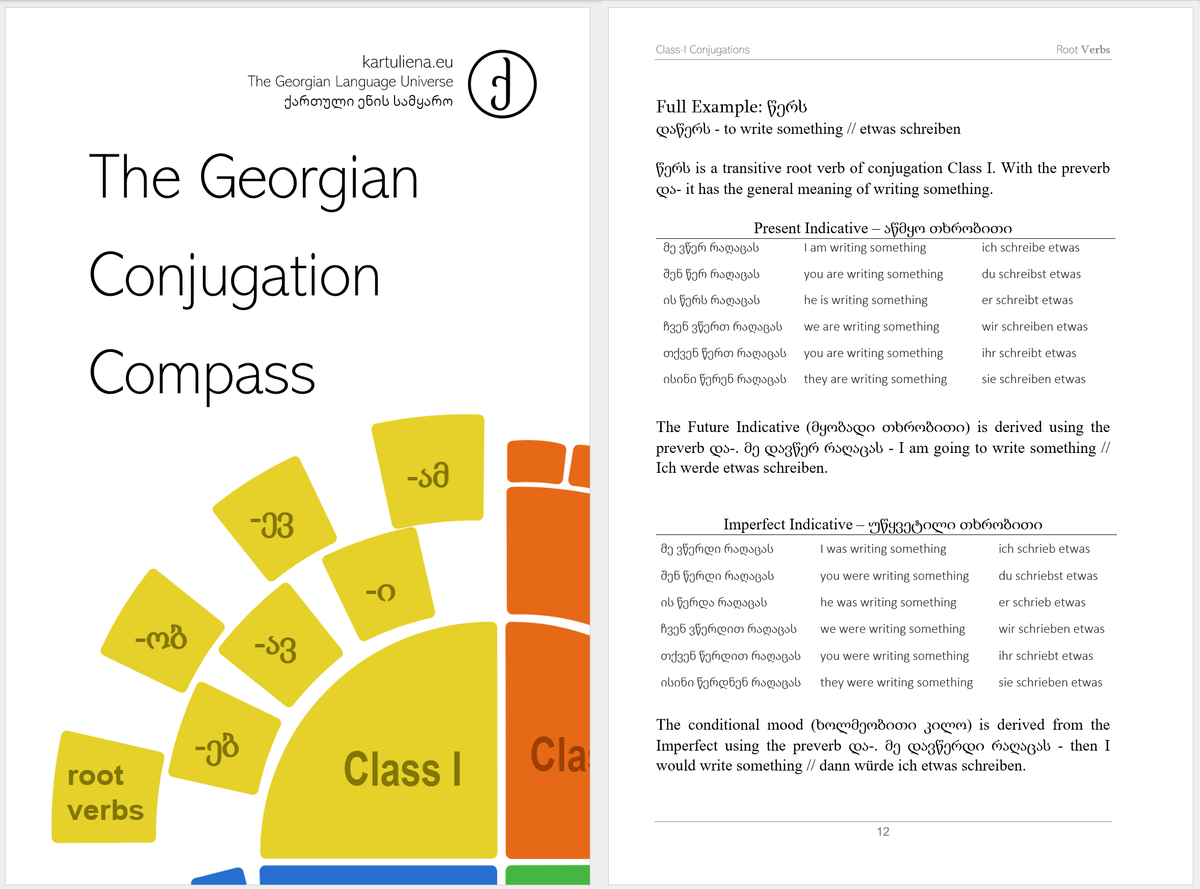
It doesn't matter what you call these verbs; it is more important to be able to recognize them in order to apply the correct rules for conjugation, using them with objects and the tenses correctly. This is what today's lesson is all about. I want to introduce you to the verb classes II and III and how to use them in a Georgian sentence.
The verbs in Class II are very important because about one quarter of all verbs belong to this class (23% or 115 verbs on kartuliena.eu) - you are going to encounter them quite often!
The verbs in Class III are not very numerous by themselves (10% or 50 verbs here on kartuliena.eu), but among them are some of the more frequently used and important verbs in the Georgian language (e.g. აქვს - to have, მიდის - to go), therefore, you should not entirly ignore these verbs.
There are only very few truly irregular verbs (2% or 10 verbs here on kartuliena.eu), but this number varies depending on where you draw the line between a verb that has an exceptional conjugation within one of the three verb classes or and what you consider an irregular verb outside these classes.
Class I
We have covered Class-I verbs already - all content in lessons 1-3 is about verbs of Conjugation Class I, so I do not want to write about them today. Follow these links for more information or a refresher, if you like: Lesson 1 (Conjugation), Lesson 2 (Using Objects), Lesson 3 (Past Tenses), The Verbs of Conjugation Class 1.
Class II
How to recognize and conjugate Class-II verbs?
Most of the Class-II verbs can by recognized in the present and future tenses by their endings. Often they are -ება, -ები or -ებიან, e.g. in იხატება - to be drawn; იწერება - to be written, ინთება - to be lit, something is catching fire. Much more rarely, there are a few Class-II verbs based on the ending -ობა (ენდობა - to trust someone), -ევა (ინძრევა - something is moving) or -ია (სწერია - to be written).
Compare the conjugation tables of the Class-I Verb წერს and Class-II Verb იწერება:
...